
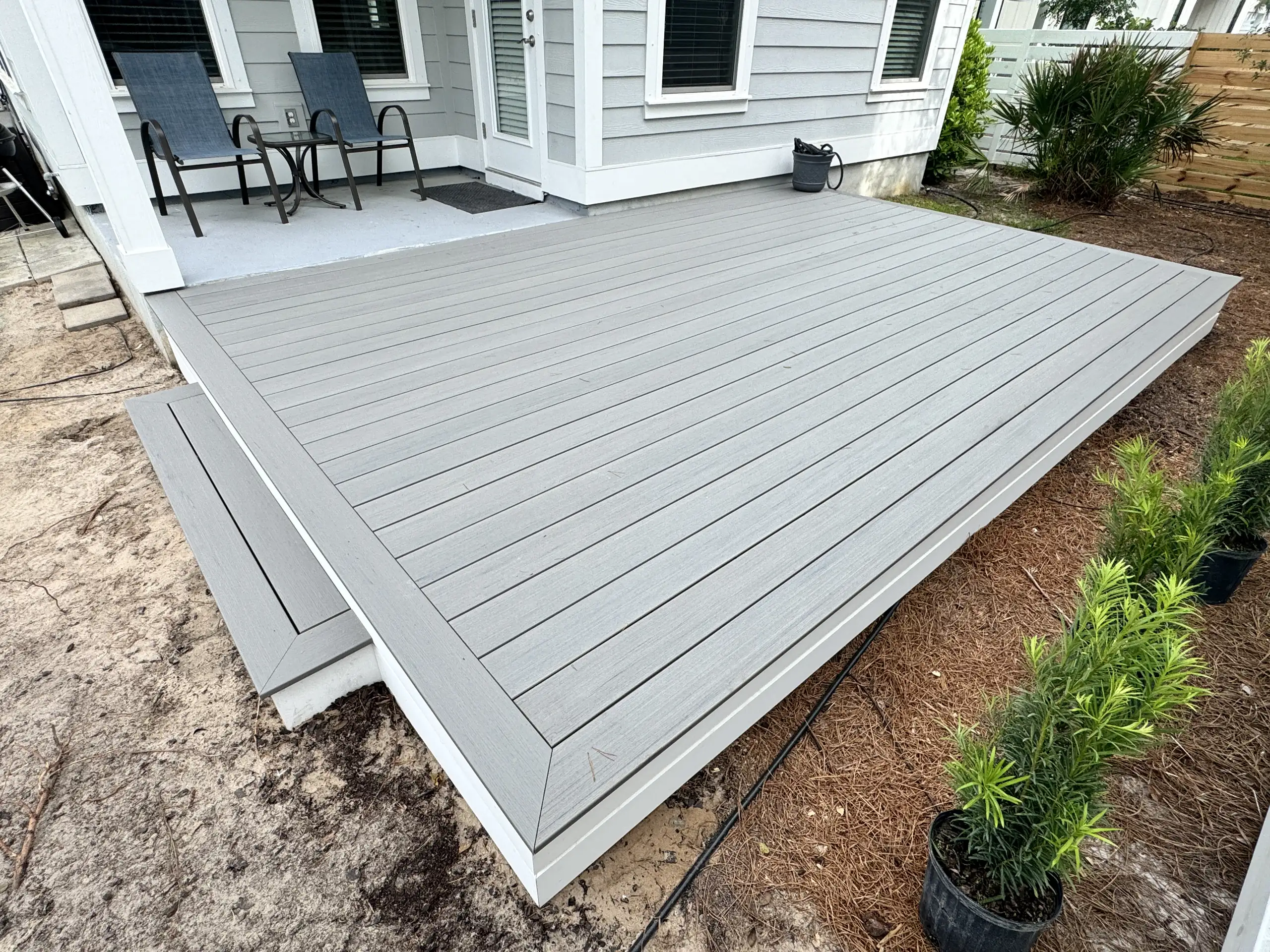
Skim these decision points for a quick way to think about deck repair or replacement in coastal Florida. Repair often makes sense when damage is limited, and the supporting structure remains sound. Consider replacement when rot, corrosion, movement, or storm damage affects multiple structural areas.
A damaged deck can make an outdoor space feel uncertain because the visible problem rarely tells the full story. The right answer depends on the deck’s age, framing, fasteners, ledger connection, maintenance history, and exposure to salt air, humidity, ultraviolet light, wind-driven rain, and storms.
NOAA reported that the 2024 Atlantic hurricane season produced 18 named storms, 11 hurricanes, and 5 major hurricanes. That does not mean every worn deck needs replacement, but it does mean coastal Florida homeowners should evaluate structure and storm exposure before focusing on cosmetic repairs.
For examples of coastal construction details, explore coastal deck materials, custom deck construction, or recently completed deck projects before comparing repair and replacement options.
What Signs Suggest Deck Repair or Replacement?
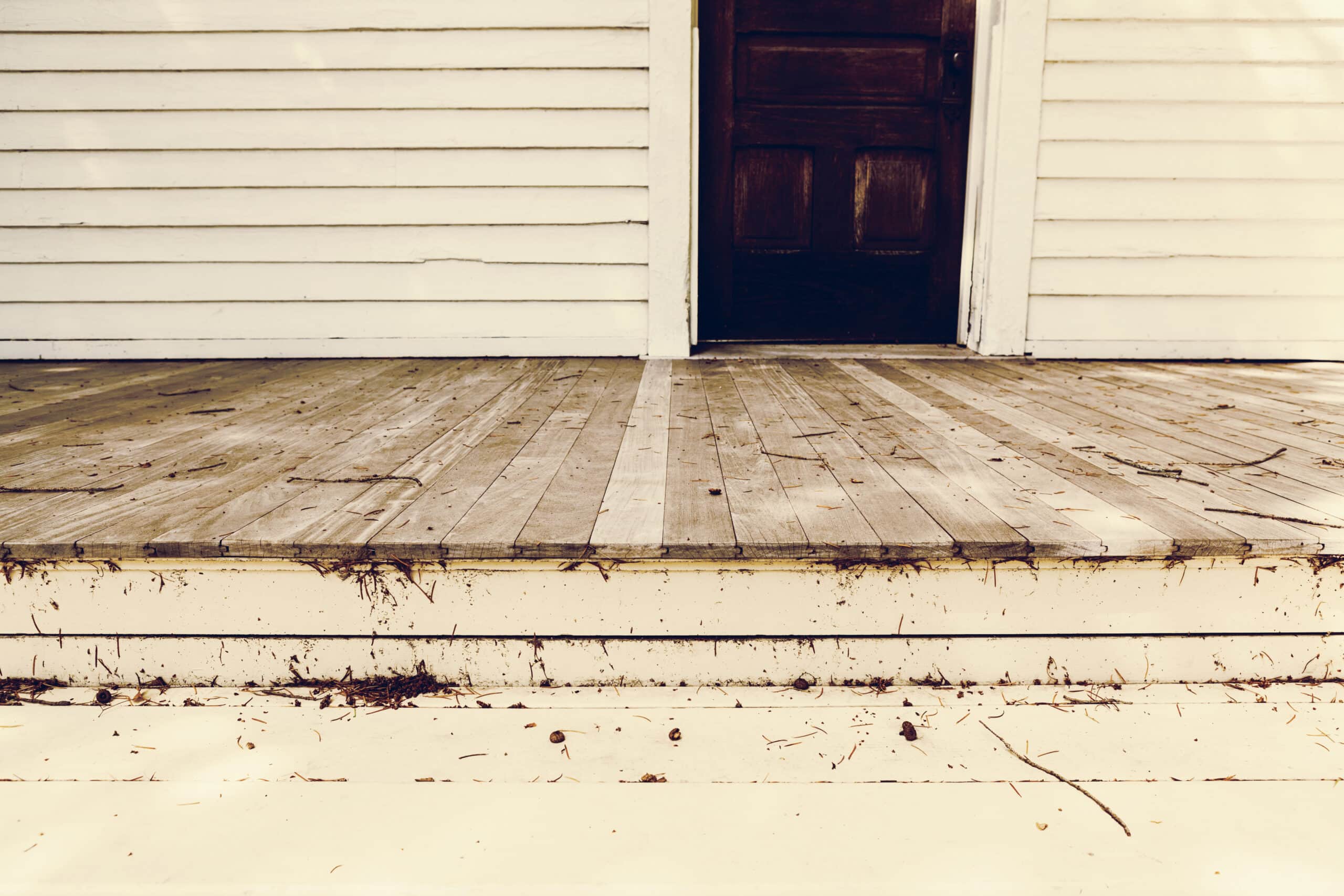
Visible wear does not automatically mean a deck needs replacement, but movement, decay, water intrusion, and connection problems deserve prompt attention. A Florida deck inspection should include the walking surface, joists, beams, posts, ledger, stairs, railings, and fasteners before anyone recommends repair, resurfacing, or replacement.
- Movement Underfoot: Noticeable bouncing, shifting, or a spongy feel can point to a concern deeper than one damaged board. Have the joists, beams, posts, ledger, supports, and connections checked before adding screws or replacing surface boards.
- Soft or Deteriorated Wood: Soft spots, splitting, fungal staining, or crumbly areas can indicate decay in boards or nearby framing. Isolated damage may allow a targeted repair, while decay across connected areas can require structural work or full replacement.
- Corroded or Loose Connections: Salt air damage to decks often appears around metal hardware, especially near stairs, ledgers, rail posts, and joist hangers. Corroded connectors should be evaluated with the surrounding framing because hardware failure can weaken an otherwise clean-looking deck.
- Problems in Multiple Zones: A single loose board is different from damage across stairs, railings, surface boards, and framing. The signs a deck needs repair or replacement become clearer when you track where problems appear and whether they are spreading.
Pro Tip: Take photos of visible changes every few months, especially after heavy rain or tropical weather, so you can show where the condition has worsened.
| What You Notice | What It May Mean | Smart Next Step |
|---|---|---|
| One or two damaged surface boards | Localized wear, impact damage, or isolated rot | Check the framing below before replacing boards |
| Soft joists, leaning posts, or loose railings | Possible deck structural damage | Stop using the affected area until it is evaluated |
| Rust-stained hardware or loose fasteners | Salt exposure or incompatible hardware | Inspect hangers, bolts, post bases, and ledger connections |
| Repeated repairs in different areas | The deck may be aging as a system | Compare repair cost, remaining lifespan, and replacement value |
Think of the deck like a small bridge attached to your home. The surface boards are what you see, but the frame, hardware, and load path keep the space usable when people, furniture, grills, and coastal weather add stress.
When Is Repair Better Than Replacing a Coastal Deck?
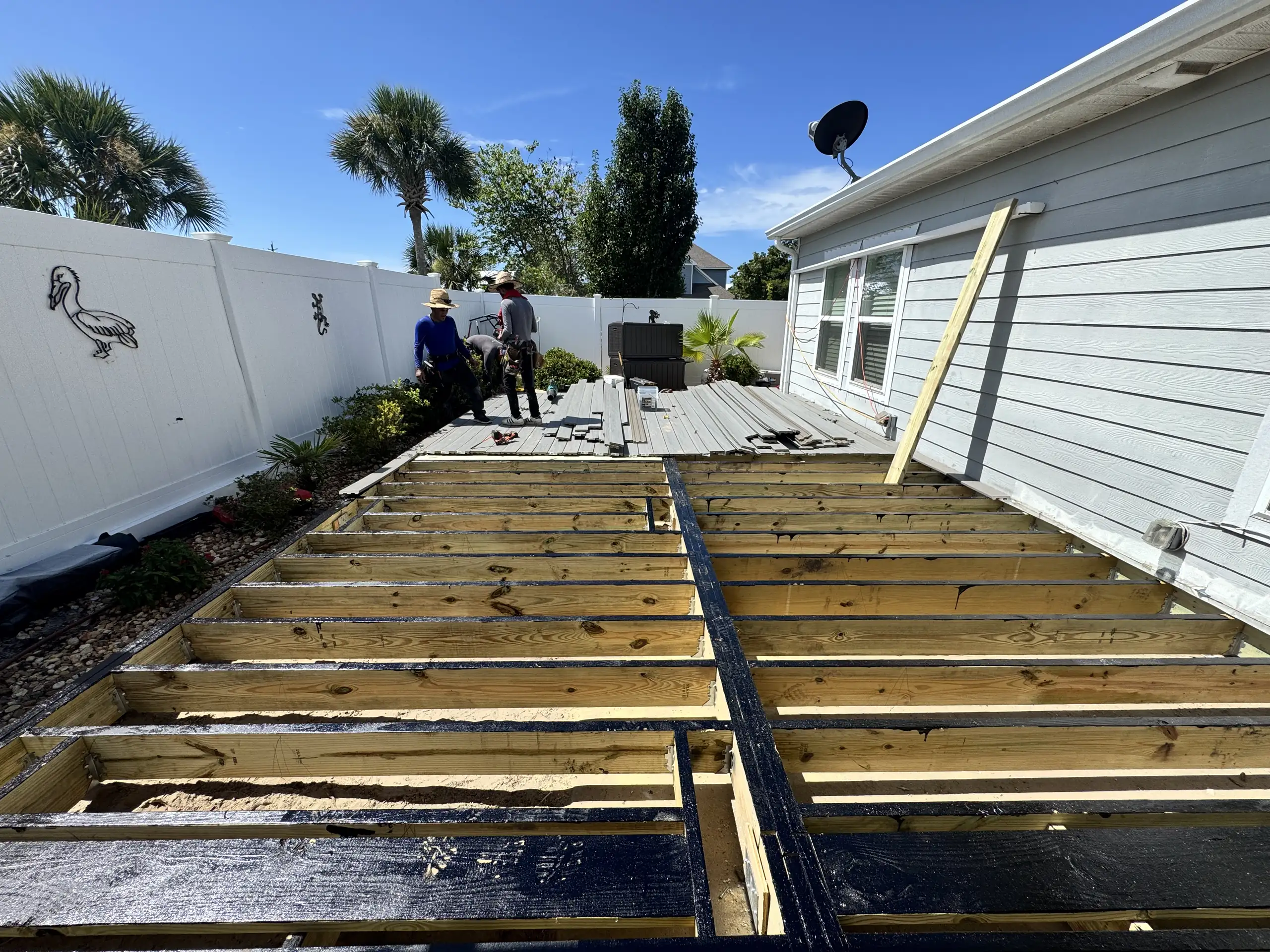
Repair can be the practical choice when the problem is localized, and the supporting structure remains suitable. Replacement becomes more reasonable when damage reaches the frame, the deck no longer fits how you use the home, or repairs would only delay a larger failure.
- Repair a Limited Problem: A damaged board, small stair issue, or limited area of deterioration may be repairable when nearby structure remains sound. Ask a professional to confirm the damage boundaries before assuming the visible spot is the whole problem.
- Assess the Whole Frame: Deck structural damage matters because surface boards rely on the frame and connections below. Ask what parts were examined and what evidence supports the proposed scope, so you know whether the repair solves the cause.
- Compare Wood Options Carefully: Wood deck repair or replacement depends on the wood’s condition, the spread of decay, and whether affected components can be matched. If you prefer a natural surface, review wood deck options and ask how each choice handles moisture, checking, movement, and coastal maintenance.
- Look Beyond Storm Labels: The phrase hurricane-resistant decking materials does not prove that a deck can withstand a specific storm or meet every local requirement. Ask how materials, framing, fasteners, railings, and installation details work together under coastal conditions.
Homeowner Insight: A sound-looking surface does not confirm that the framing and connections underneath remain sound.
Repair or Replace Decision Flow
- Start With Safety: If the deck moves, leans, sags, or has loose rails, limit use until it is inspected.
- Check the Frame: If joists, beams, posts, or the ledger are compromised, surface repair is not enough.
- Measure the Spread: Localized damage points toward repair, while repeated damage across zones points toward replacement.
- Compare Remaining Life: If the frame is near the end of its useful life, resurfacing can become a short-term patch.
- Choose the Right Scope: Repair the part, resurface the deck, or rebuild the system based on evidence, not guesswork.
For homeowners in Panama City Beach, Santa Rosa Beach, Destin, and nearby coastal communities, salt exposure and humidity can make hidden damage more important than cosmetic wear. FEMA has long warned that even one inch of floodwater can cause up to $25,000 in damage to a home, which reinforces a practical point for decks: trapped water becomes expensive when it reaches structural materials.
What Should You Compare Before Choosing?
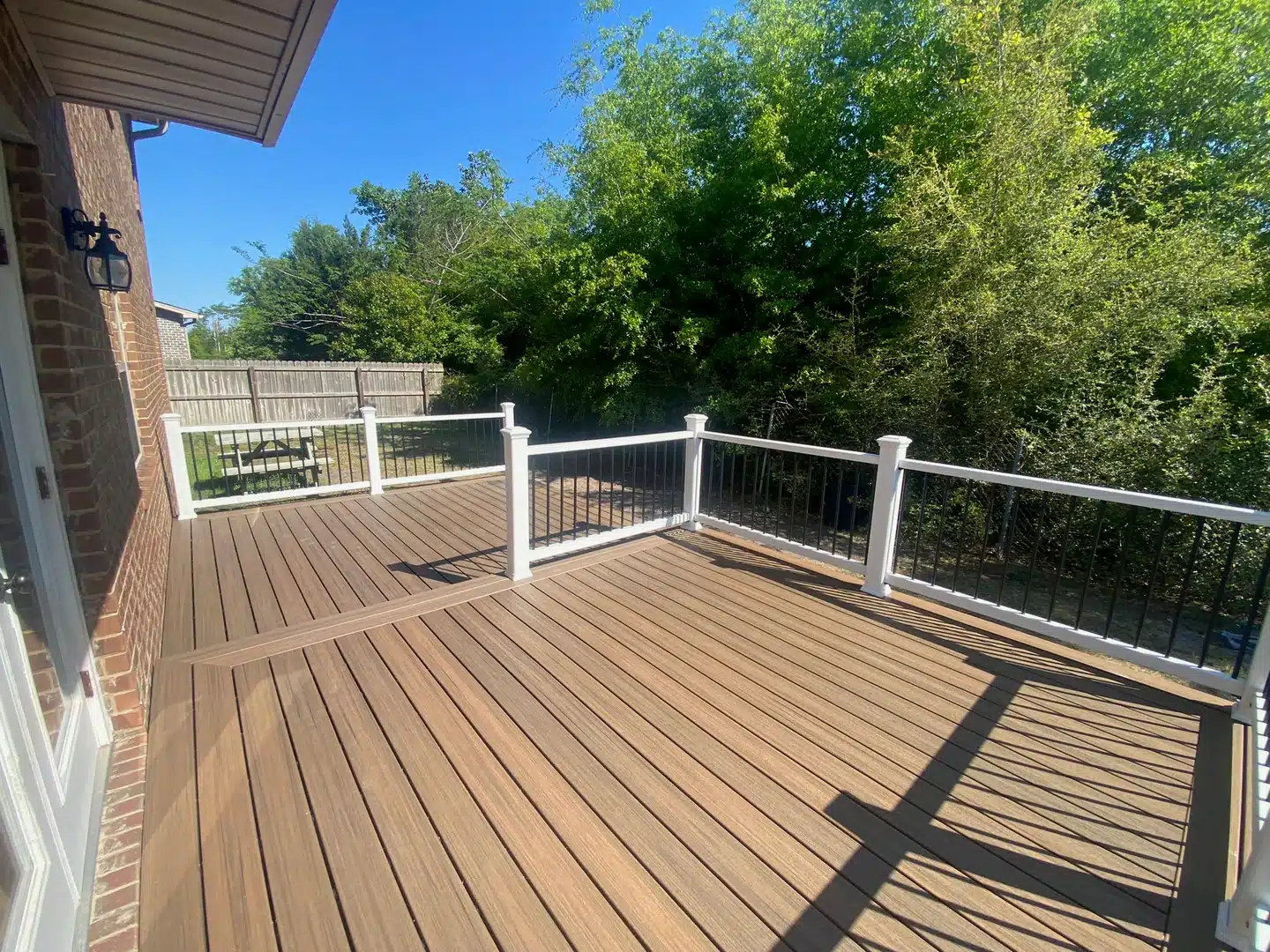
Compare the condition of the existing structure, the work each option requires, and the maintenance each path creates. Deck repair or replacement in coastal Florida has no universal price because size, height, access, materials, permitting, railings, stairs, and hidden damage can all change the scope.
- Compare Full Project Scope: Deck repair cost vs. replacement cost isn’t just a comparison between a few new boards and a new deck. Ask whether each estimate includes a structural evaluation, removal of damaged material, connection repairs, disposal, permitting needs, railing work, stair work, and finish details.
- Ask What Could Change: Hidden deterioration can appear once boards, stairs, or trim are removed. Ask which assumptions the estimate depends on, what findings could expand the work, and how proposed changes would be explained before proceeding.
- Consider Access and Layout: Stairs, railings, elevated sections, tight side yards, utilities, pools, and house connections can affect labor and complexity. Share the deck’s layout and known problem areas so the assessment reflects the actual project rather than a surface-only guess.
- Review Ongoing Upkeep: Materials and exposure influence cleaning, inspection, and maintenance after the work is done. If you are considering synthetic surfaces, compare composite decking material options and the trade-offs between lower maintenance, heat, texture, color, and cost.
Pro Tip: If a proposal only discusses deck boards and never mentions the frame, ledger, fasteners, rail posts, drainage, or permits, ask for more detail before you commit.
| Decision Factor | Repair May Fit When | Replacement May Fit When |
|---|---|---|
| Framing condition | Joists, beams, posts, and ledger are sound | Structural members show rot, movement, or widespread deterioration |
| Damage location | Damage is isolated and easy to access | Damage appears across stairs, railings, surface, and frame |
| Deck age and history | Maintenance history is clear, and the structure has been cared for | The deck is older, repairs are repeated, or maintenance history is unknown |
| Future plans | You want to preserve the same footprint and function | You want a new layout, larger outdoor living area, or added features |
| Material goals | Existing materials can be matched or blended acceptably | You want updated materials, railings, lighting, or framing |
If the deck will become part of a larger outdoor living plan, compare the repair decision with related upgrades such as multi-level deck design, deck lighting, railing, and features, or outdoor living structures. A small repair may be enough for a safe landing, while a full replacement may make more sense if the layout, shade, railings, stairs, and traffic flow all need to change.
Deck Repair or Replacement in Coastal Florida FAQs
Do I need a permit to repair or replace a deck in Florida?
It depends on the scope of work and the rules in your local jurisdiction. Small surface repairs may be treated differently from structural work, expanded footprints, stair changes, attached structures, electrical work, or major replacement.
The safest move is to ask your contractor and local building department before work begins. If the deck connects to the home or affects structural components, do not assume it is a no-permit repair.
How can I care for a deck near saltwater?
Keep the surface clean, remove trapped leaves and sand, rinse off salt residue when conditions are harsh, and watch areas where moisture sits against wood, fasteners, or rail posts. Salt and humidity are persistent, so a deck near the Gulf should be checked more often than an inland deck.
Pay close attention after storms or long wet periods. If you notice movement, rust staining, soft spots, or railing looseness, have the issue assessed before it spreads.
Can I tell how old a deck is by looking at it?
You can sometimes make an educated guess, but appearance alone does not tell the whole story. A freshly stained deck may still have aging framing underneath, while a faded surface may sit on a solid structure.
Look for records, permits, prior proposals, or photos from past work if you have them. A physical inspection gives a better picture of the deck’s current condition than age alone.
What information should I gather before asking for an estimate?
Gather the deck’s approximate size, age if known, repair history, material type, and the exact places where you notice movement, softness, rust, cracking, or loose components. Photos help, especially close-ups of problem areas and wide shots showing the full layout.
Also think about your goal before the appointment. Are you trying to make the existing deck safe, refresh the surface, change the layout, add shade, or build a new outdoor living space?
Is resurfacing the same as replacing a deck?
No. Resurfacing usually means replacing the walking boards and sometimes the railing while keeping the existing frame. Replacement means removing and rebuilding more of the structure.
Resurfacing can be a smart choice when the frame is confirmed sound. If the frame is soft, poorly connected, or corroded, resurfacing can hide the problem instead of solving it.
What is the biggest mistake homeowners make with coastal Florida deck repair?
The biggest mistake is treating a structural problem like a cosmetic problem. New boards, stain, or railing caps can improve appearance, but they won’t fix rotten joists, a weak ledger, failing posts, or corroded hardware.
Before spending money on appearance, confirm the load-bearing parts are dependable. That step can keep you from paying twice: once for the surface and again for the structure underneath.
Make a Thoughtful Deck Repair or Replacement Decision With Gulf Coast Decks
Deck repair or replacement in coastal Florida should be based on evidence, not pressure to choose the biggest or smallest project. The right path may be a spot repair, resurfacing, structural rebuild, or a new deck designed around how your family uses the space.
Start with the parts homeowners cannot see from above: framing, ledger, posts, beams, stairs, rail connections, and hardware. Once those are evaluated, the decision between repair and replacement becomes more practical and less stressful.
If you want a clearer answer, schedule a deck consultation to review the visible damage, inspection findings, material options, and questions that will help you decide.